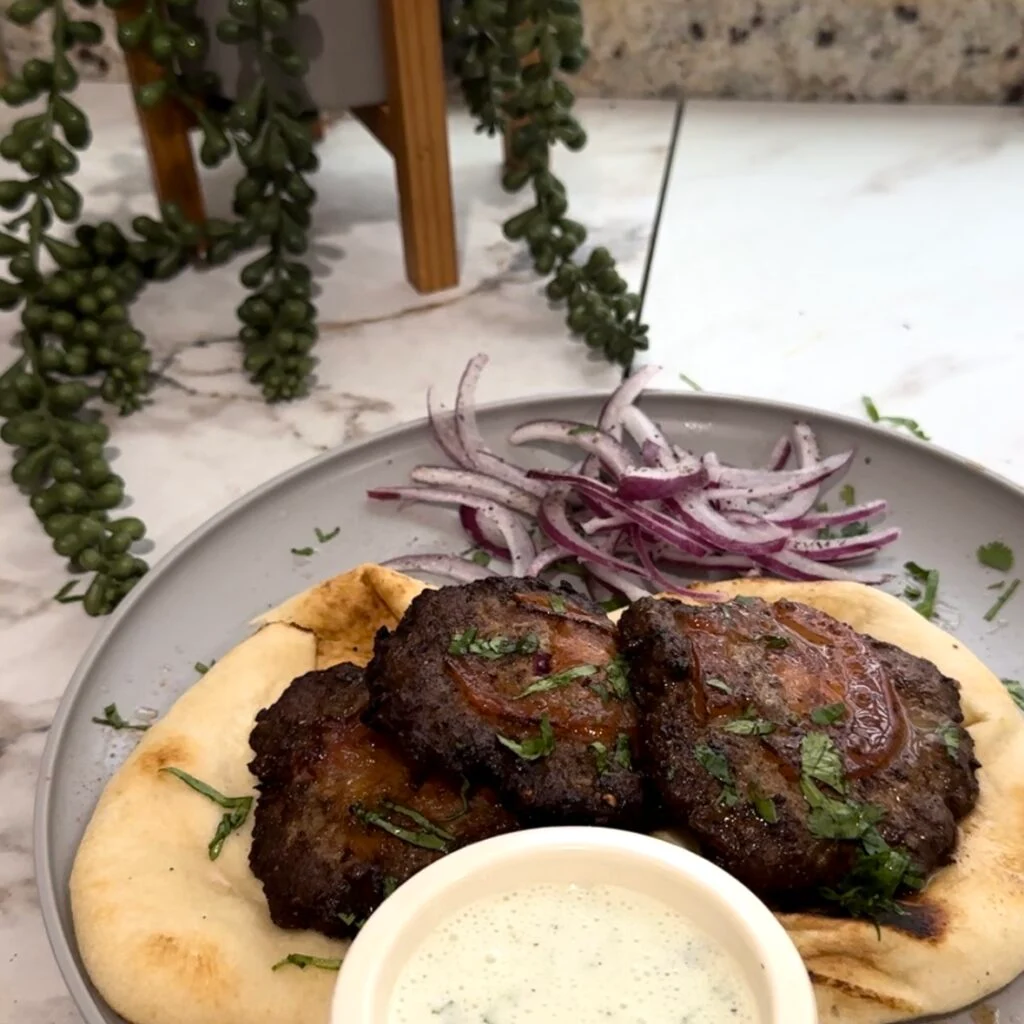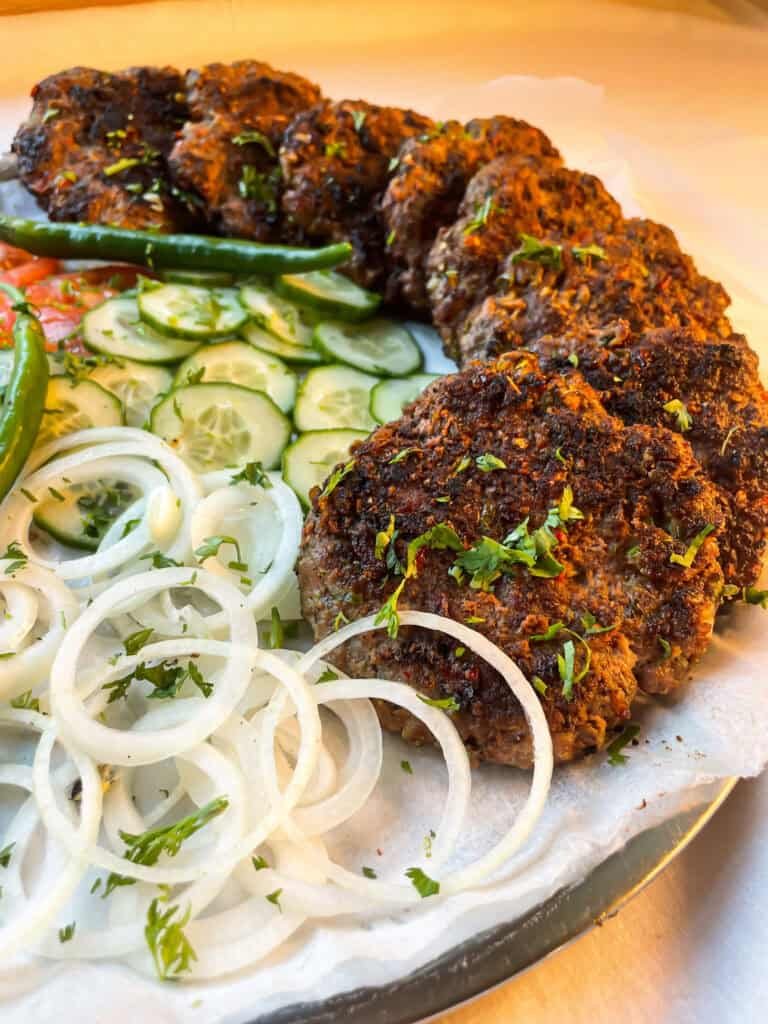
The sizzle of a flat, spiced patty hitting hot oil is the sound of Peshawar’s street food at its best. This chapli kabab recipe brings that experience into your kitchen: crisp, lacy edges, a juicy center, and the tangy, earthy flavor of coriander, tomato, and pomegranate seeds. You don’t need a street-side tawa or a restaurant kitchen, just a good pan, the right spices, and a few simple techniques.
Quick snapshot
Chapli kabab is a flat, round, patty-style kabab from Pashtun cuisine, and it is most closely associated with Peshawar. The name is commonly linked to the Pashto word for a flat sandal, which describes the shape well. Unlike seekh kabab, which is molded around a skewer, chapli kabab is pressed flat and shallow-fried, so the edges turn crunchy while the middle stays tender.
What sets the authentic Peshawari version apart is the mix of ingredients inside the patty. Fresh tomato, chopped green chilies, and crushed coriander seeds are mixed straight into the mince, and dried pomegranate seeds (anardana) give it a tangy note that you won’t find in most other kababs. The result is a rustic, bold, and very fresh-tasting kabab.
The ingredient list is short and easy to find. Here is everything you need for 8-10 patties.
Meat and binders
Vegetables and aromatics
Spices
For frying
Both work well, and the choice comes down to taste. A beef chapli kabab recipe gives you a robust, widely loved flavor and is easier to find in most places. A mutton chapli kabab recipe is the more traditional choice and has a richer, slightly gamey taste. Whichever you pick, don’t use very lean mince. The fat (around 20%) keeps the kababs juicy and helps the edges crisp up in the pan. Ask your butcher to mince the meat twice for a finer, more cohesive texture.
The chapli kabab masala is what makes the dish taste authentic. You can use a store-bought chapli kabab masala for convenience, but a quick homemade mix tastes noticeably fresher.
To make it, dry roast the coriander seeds, cumin seeds, and pomegranate seeds in a pan for about a minute until fragrant. Let them cool, then crush them coarsely with a mortar and pestle or the back of a spoon. Don’t grind them to a fine powder. The coarse bits of seed are part of the signature texture and flavor.
Chapli kabab with pomegranate seeds is the classic style. Anardana adds a mild sourness that balances the richness of the meat and the heat of the chilies. If you can’t find it, a pinch of dried mango powder (amchur) or a few drops of lemon juice can stand in, though the flavor won’t be exactly the same.
Follow these steps for homemade chapli kabab that holds together and tastes like the real thing.
Step 1: Prepare the mince and vegetables. Pat the mince lightly with a paper towel if it looks wet. Finely chop the onion, deseeded tomatoes, green chilies, coriander, and mint. Removing the tomato seeds is important because excess moisture is the number one reason kababs fall apart.
Step 2: Mix the meat with the spices and binders. In a large bowl, combine the mince, ginger-garlic paste, crushed coriander, cumin, anardana, chili flakes, black pepper, garam masala, and salt. Add the egg and cornflour. Mix and knead with your hands for 2-3 minutes until the mixture turns sticky and cohesive.
Step 3: Fold in the vegetables. Add the onion, tomatoes, green chilies, coriander, and mint. Mix gently, just until combined. Overworking at this stage releases more water from the vegetables.
Step 4: Rest the mixture. Cover the bowl and refrigerate for 30-60 minutes. This lets the flavors develop and firms up the mixture, which makes shaping much easier.
Step 5: Shape the patties. Wet your hands slightly, take a golf-ball-sized portion, and press it into a flat, round patty about 1 cm (1/2 inch) thick and 8-9 cm (3 1/2 inches) wide. Traditional chapli kababs are rustic, so slightly uneven edges are perfectly fine.
Step 6: Fry until golden and crisp. Heat oil in a wide, flat pan over medium-high heat. Fry the patties in batches for 3-4 minutes per side until deep golden brown and crisp at the edges. Drain on paper towels and serve hot.
Traditional shallow-frying (best results). Use enough oil to come about halfway up the patty. This is how chapli kabab is cooked on the streets of Peshawar, and it gives the best crust. Keep the heat at medium-high so the outside crisps before the inside overcooks.
Air fryer. Brush the patties lightly with oil and cook at 190°C (375°F) for 12-14 minutes, flipping halfway. They will be lighter and less crunchy but still flavorful.
Oven. Place the patties on a lined, oiled tray and bake at 220°C (425°F) for 18-20 minutes, flipping once. Finish with a minute or two under the grill for extra color.
How to check doneness. The kababs should be deeply browned on both sides, firm to the touch, and cooked through to the center. Beef and mutton mince is safe at an internal temperature of 71°C (160°F).
Getting crispy chapli kabab is all about moisture control and heat management.
If you want to make chapli kabab without egg, you can still get a good result. The egg mainly acts as a binder, and these substitutes work well in its place:
Always rest the mixture in the fridge when skipping the egg, since chilling helps the patties hold their shape.
Chapli kabab is traditionally served hot with:
You can also turn them into a chapli kabab burger, wrap them in a paratha for a kabab roll, or serve them as a party appetizer with dips.
With simple ingredients and a few smart techniques, you can make authentic Peshawari chapli kabab at home that’s crisp on the outside, juicy inside, and full of tangy, aromatic flavor. Use fatty mince, crush your spices coarsely, and fry in hot oil, and you’ll get street-style results every time. Compared with ready-made frozen chapli kabab in Pakistan, a homemade batch wins on freshness and flavor, and you can still freeze the extra patties for busy days.
Tried this chapli kabab recipe? Leave a comment and a rating below, share it with someone who loves kababs, and check out our recipes for fresh naan, mint chutney, and raita to complete the meal.
It is made from minced beef or mutton mixed with chopped tomato, onion, green chilies, fresh coriander, crushed coriander seeds, cumin, pomegranate seeds, and a small amount of binder such as egg and cornflour.
Both work. Mutton is more traditional and richer in flavor, while beef is easier to find and equally delicious. Choose mince with around 20% fat either way.
The usual causes are too much moisture (watery tomatoes or wet mince), too little binder, or skipping the resting time. Deseed the tomatoes, add cornflour, and chill the mixture before shaping.
Yes. Use gram flour, extra cornflour, breadcrumbs, or strained yogurt as a binder, and rest the mixture in the fridge before frying.
Yes. Air-fry at 190°C (375°F) for 12-14 minutes or bake at 220°C (425°F) for 18-20 minutes. Pan-frying still gives the crispiest, most authentic result.
Cooked kababs keep for up to 3 days in the fridge. Raw patties can be frozen for 2-3 months.

Welcome to Orange Foods Expert, your premier destination for top-quality frozen foods! At Orange Foods Expert, we pride ourselves on delivering a wide array of delicious and convenient frozen meals.
Copyright © 2026 Orange Foods Expert All Rights Reserved.
Privacy Policy l Term of Service
WhatsApp us